
The global trade in mini excavators has been steadily increasing in recent years, with demand concentrated in sectors such as European backyard renovations, Southeast Asian infrastructure expansion, and African farmland development. Chinese-made mini excavators, with their high cost-performance ratio and flexible adaptability, have become a major source of procurement for global buyers.
Cross-border procurement differs from domestic transactions, requiring consideration of different countries' environmental regulations, certification standards, operating conditions, and after-sales service systems. Blindly placing orders can easily lead to customs clearance difficulties, equipment idleness, or delayed maintenance. This article, based on global market characteristics and practical experience in cross-border procurement, outlines key decision-making factors to provide practical guidance for overseas buyers.
I. Targeting Global Operating Conditions for Precise Matching of Machine Types and Configurations
Cross-border procurement prioritizes matching the target market's operational scenarios. Differences in regional operating conditions directly determine the tonnage and core configuration of the machine.
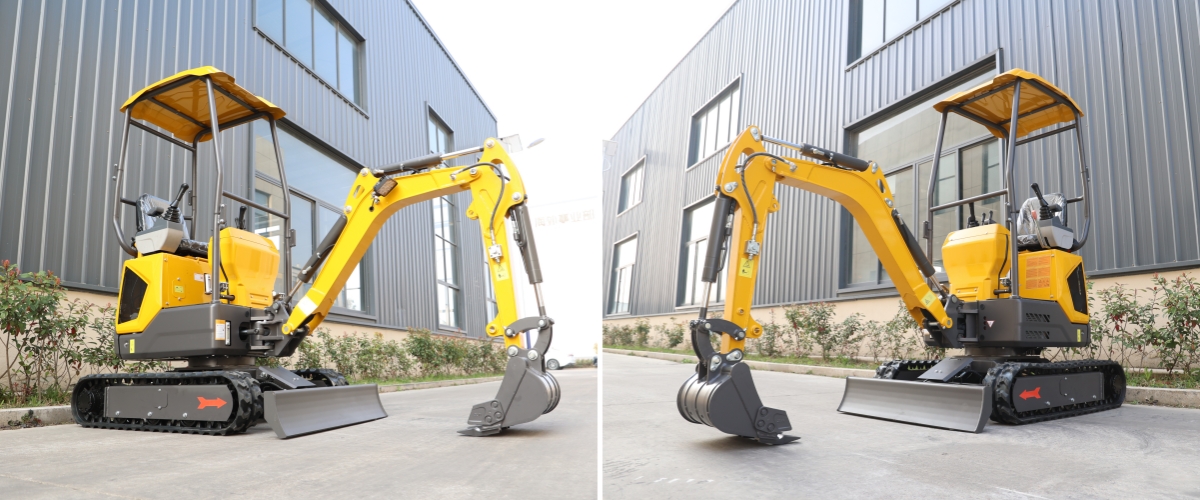
1. Europe and America: Primarily for landscaping and scattered municipal projects, with limited space and a focus on low noise. HY10-HY30 mini excavators are preferred, requiring no tail swing, a narrow body, and suitability for courtyard passageways and greenhouse operations. Since most operators are not professional, a simplified operating interface and improved handling smoothness are necessary.
2. Southeast Asia/Africa: Focusing on farmland reclamation, small-scale infrastructure, and mine auxiliary operations, with complex soil conditions and many rocky mountainous areas. HY30-HY60 ton mainstream models are preferred, featuring reinforced steel tracks, cooling systems, and sandstorm protection, suitable for high-temperature, dusty, and harsh environments.
3. Special Scenarios: For indoor demolition and underground pipeline construction, the HY10 ultra-mini excavator is selected. For frequent site changes, the overall weight needs to be considered, ensuring compatibility with light trailer transport and compliance with local road weight limits.
II. Strictly Adhere to International Compliance Standards to Avoid Customs Clearance and Operational Risks
Environmental and safety certifications are the "passports" for cross-border procurement. Different markets have stringent access standards, and non-compliance will result in return shipments or fines.
1. Emission Standards: The EU requires Stage V, the US requires EPA Tier 4, and Eurasian Economic Union countries such as Russia require compliance with TR CU 010/2011 standards. Southeast Asia mostly follows Euro IV. Prioritize compliant emission models to avoid the risk of restrictions or phase-out.
2. Mandatory Certifications: EU CE, Eurasian Economic Union EAC, and other certifications are indispensable. Verify the authenticity of certificates before procurement to ensure that the model number matches the complete unit.
III. Focusing on Core Performance to Adapt to Global Multi-Scenario Operations
The hydraulic system, operating parameters, and attachment compatibility determine the efficiency and durability of equipment in overseas working conditions.
1. Hydraulic System: As the core of the excavator, the hydraulic system is crucial. A good hydraulic system ensures smooth operation, fast response, and low failure rate, adapting to long-term continuous operation. The European and American markets emphasize precision operation, while the African market emphasizes heavy-load stability.
2. Key Parameters: Focus on verifying digging depth, maximum unloading height, and bucket capacity to match common local operational needs. Among models of the same tonnage, prioritize products with high digging force and short cycle time to improve operational efficiency.
3. Attachment Compatibility: Overseas users value versatility. Attachments such as breakers, log grapples, augers, and tilting buckets must be compatible. Auxiliary hydraulic lines should be provided for quick tool switching, covering various operations including excavation, breaking, and material handling.
IV. Calculate Total Lifecycle Costs and Avoid the Pitfalls of Low-Price Procurement
Cross-border procurement requires a comprehensive consideration of the entire lifecycle cost, including purchase price, transportation costs, tariffs, fuel consumption, maintenance, and spare parts. Avoid focusing solely on unit price, which can lead to excessive hidden expenses.
1.Basic Costs: Compare FOB quotes, ocean freight, destination port tariffs, and clearance fees to calculate the total landed cost.
2.Operating Costs: Prioritize fuel-efficient models. High fuel prices in Europe and America, with a 10%-15% difference in fuel consumption, will significantly increase annual operating costs.
3. Residual Value and Value Preservation: Reputable brands like HUAYEE have low failure rates, high resale value, and strong global liquidity, making resale easier and reducing long-term holding costs.
V. Emphasize Global After-Sales Service and Spare Parts Supply to Ensure Equipment Uptime
The biggest pain point in overseas procurement is slow after-sales response and spare parts shortages, directly impacting project progress and profitability.
1. Localized Service Network: Prioritize brands with service outlets or authorized agents in target markets to ensure timely technical response and spare parts supply, minimizing downtime losses; HUAYEE has established warehousing centers in core European and American markets to ensure rapid supply of commonly used and easily damaged parts.
2. Warranty Policy: Confirm the cross-border warranty period (usually 6-12 months), warranty coverage (core components such as engines and hydraulic systems), and claims process to avoid future repair disputes. Also, request English/local language versions of repair manuals and parts catalogs to facilitate maintenance by local technicians.
VI. Verify Document Compliance to Ensure Smooth Cross-Border Transactions
Complete technical and trade documents are crucial for customs clearance, vehicle registration, and subsequent operation; none can be omitted.
1. Basic Documents: Certificate of Conformity, Certificate of Origin, Commercial Invoice, Packing List, Bill of Lading, ensuring the model and serial number match the complete machine.
2. Technical Documents: CE/EAC certification certificates (English/local language version), Safety Data Sheet, Emissions Test Report, meeting the technical verification requirements of the destination port.
3. Transaction Guarantee: Sign a formal foreign trade contract, clearly defining the delivery date, payment method, warranty terms, etc.
Cross-border procurement of mini excavators involves a systematic matching of working conditions, compliance, performance, cost, and after-sales service, rather than a simple price comparison. Global market demands are diverse, ranging from precision operations in European and American backyards to heavy-duty infrastructure needs in Africa; the core considerations are "adaptability" and "reliability."
High-quality Chinese brands like HUAYEE, with their deep adaptation to global working conditions, comprehensive international certification systems, and localized after-sales networks, have become cost-effective choices for overseas buyers. A rational weighing of all factors can mitigate the risks of cross-border procurement while maximizing the value of equipment in the target market, facilitating the efficient progress of global projects.